
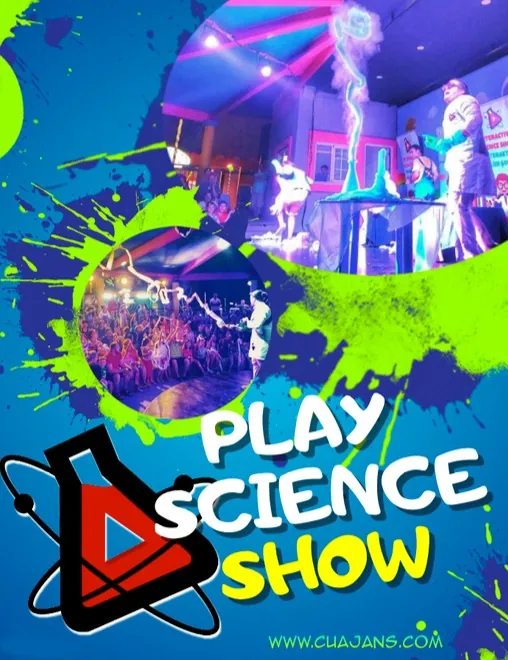
PLAY Science Show
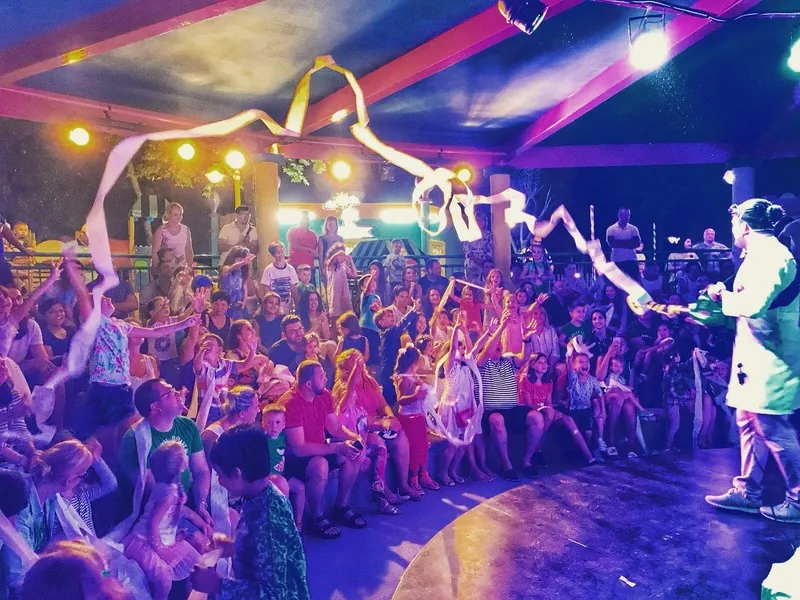
A full-scale stage production that combines science with giant stage effects, themed costumes, live music, dance and a professional cast. Children and parents are invited on stage; every experiment is done with the audience and completed with its scientific explanation.
Fact sheet
Fact sheet
- Age group
- All ages · families from 7 to 70
- Duration
- About 50 minutes
- Session
- Can be extended with extra experiments or split into parts
- Capacity
- Depending on the hall and stage layout
- Venue
- Conference hall, theatre, mall main stage, hotel amphitheatre
- Technical
- Sound and light; some parts need darkness
- Cast
- Science presenters, actors, music and dance
- Participation
- The audience is invited on stage in costume
Overview
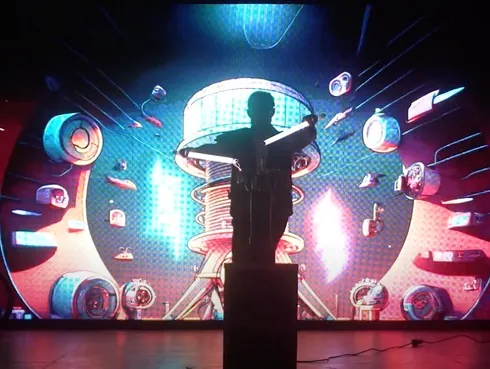
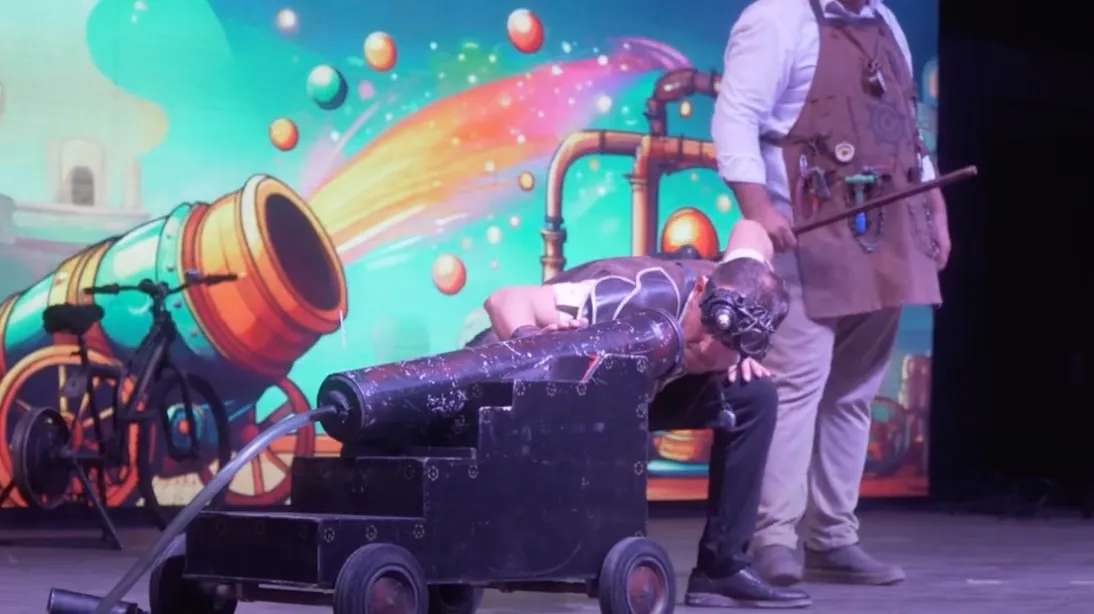
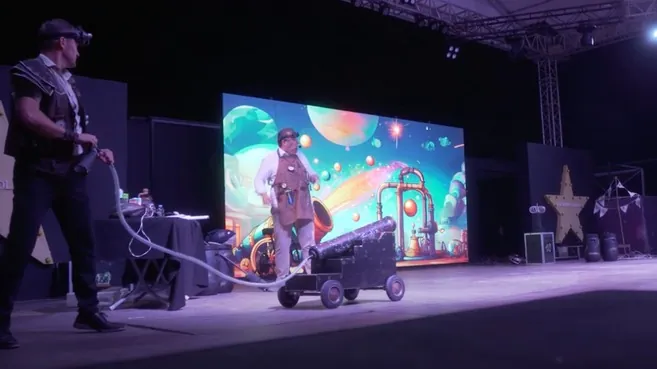
PLAY Science is a theatrical production that goes far beyond a classic science presentation. Designed for large stages, the show turns a shopping trolley flying on a giant CO₂ tube, a high-voltage Tesla coil, −196 °C liquid nitrogen reactions and big stage explosions into a visual feast.
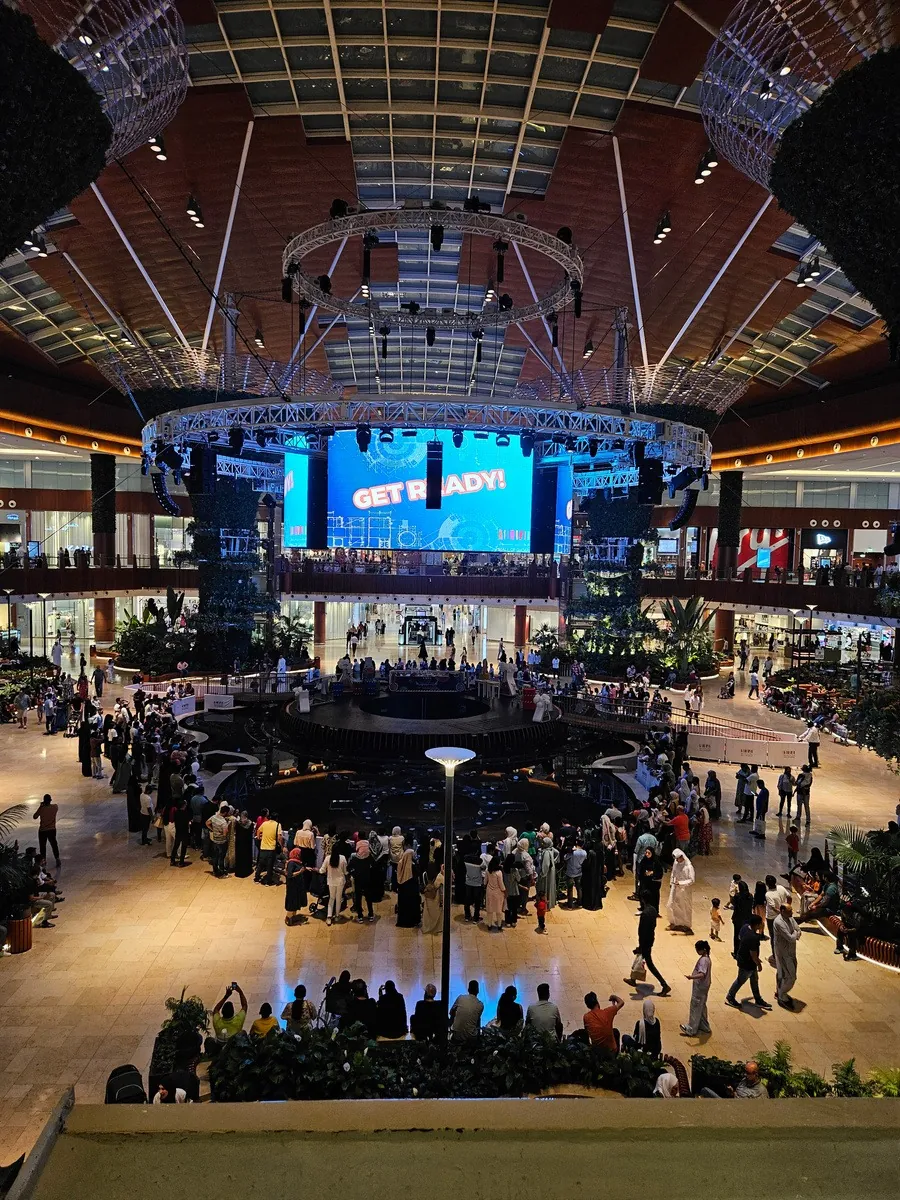
It isn’t just the crew on stage: little scientists and curious parents are called up in costumes and props that match each experiment’s theme. Invisible forces in Bernoulli experiments, air made visible by giant vortex rings, dry-ice smoke and chemical reactions all stay in the memory thanks to the short scientific explanation after each experiment. The show has also been staged internationally as LAB LEGENDS, including on the Mall of Qatar main stage in Doha.
Experience flow
- 01
Opening
The laboratory doors open with characters, music and light.
- 02
Audience on stage
Children and parents are invited to the experiments in themed costumes.
- 03
Big experiments
About eight big physics and chemistry experiments: liquid nitrogen, Tesla coil, vortex, CO₂.
- 04
Scientific explanation
A short, clear summary after every experiment.
- 05
Finale
A finale with a big stage experiment.
What does the participant do?
- Predicts the result of the experiment and observes
- Is called on stage and becomes part of the experiment
- Takes part personally in experiments such as generating electricity with a bicycle
- Learns through explanation why the experiment turned out that way
Themes and outcomes
- Matter and change
- Changes of state, freezing at −196 °C, dry ice and sublimation.
- Force and pressure
- Bernoulli’s principle, air currents, vortex rings, CO₂ thrust.
- Electricity
- The Tesla coil and generating electricity with a bicycle.
- Chemical reactions
- Elephant toothpaste and colourful reactions.
What does it mean for your organisation?
Makes abstract science concepts concrete in front of the whole school; reaches hundreds of students in one hall in 50 minutes.
All solutions for SchoolsIts session-based structure turns the main atrium into a family meeting point all weekend.
All solutions for Shopping mallsA different kind of evening that brings science and show together, with parents on stage too.
All solutions for HotelsThe main-stage show of a science fair, festival or 23 April programme.
All solutions for MunicipalitiesThe show for a family day for employees’ families or a year-end event.
All solutions for Companies and brandsDelivery models
Full production
A stage show with a cast, about 50 minutes long.
Session format
Sessions repeated throughout the day at malls and festivals.
Extended programme
A special-event version extended with extra experiments.
Technical and venue
- A stage or large performance area
- Sound and lighting system; blackout for some parts
- A stage layout that keeps a safe distance from the audience
- Experiment materials and special equipment provided by us
Safety and permits
- Liquid nitrogen, the Tesla coil and explosion effects are handled only by the expert team
- Audience members invited on stage are limited to safe tasks set by the team
- Material and chemical reports on file
Frequently asked questions
What is the difference between PLAY and the LAB?
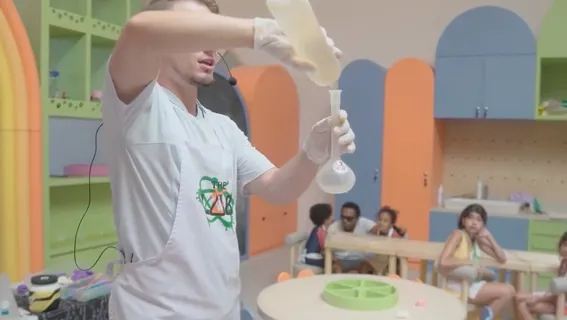
PLAY is a big-stage production; the LAB is a class show that needs no stage plus a workshop where children do their own experiments.
Can the show be held outdoors?
It is possible on a shaded stage protected from wind; parts that need darkness work best in evening sessions.
How many people can watch?
The hall sets the capacity; in large halls the whole school can watch at once.
Videos
The video starts muted when it comes into view; tap the button on the video to turn the sound on.
Photos
15 photos. Tap to enlarge.
Other productions
All productions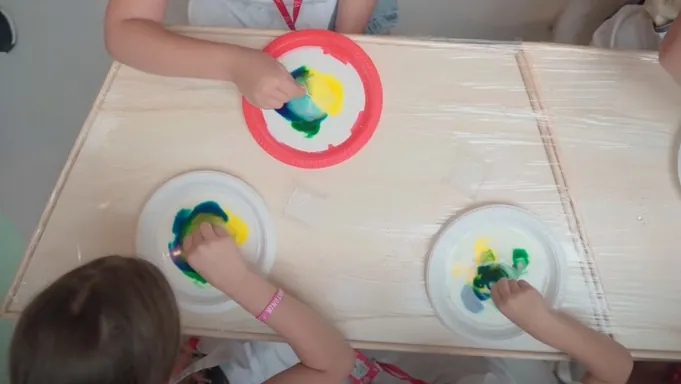
the LAB
No stage needed: science comes to the classroom. In the show students observe; in the workshop they do the experiment with their own hands and receive a diploma.
- Age groupShow: preschool, primary, middle school · Workshop: ages 5–10
- DurationShow 30–35 min · Workshop about 60 min
- CapacityShow: whole class · Workshop: 10–50 people
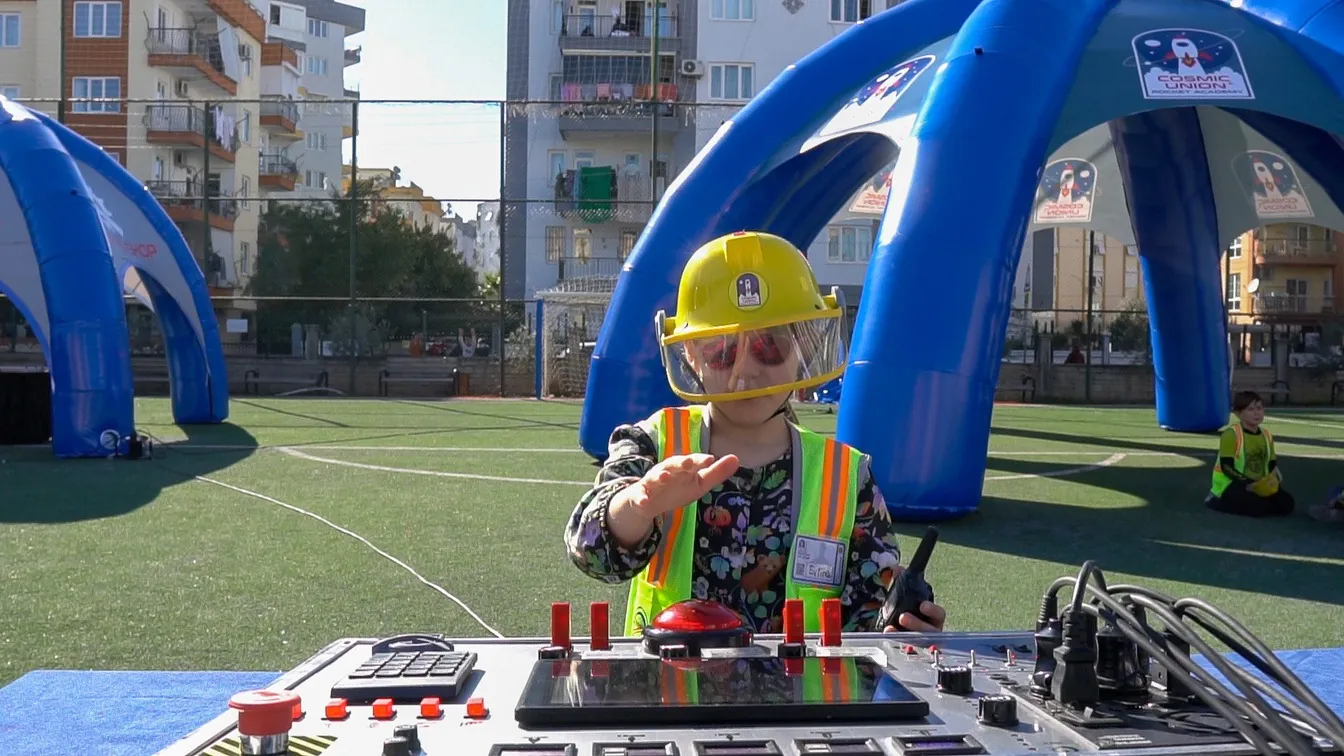
Cosmic Union Rocket Academy
Put on an engineer’s outfit, design your rocket, fit the parachute and launch it from a special ramp: with air and water pressure.
- Age groupAges 5–15 · preschool to middle school
- DurationAbout 180 minutes
- CapacityDepending on the size of the launch area
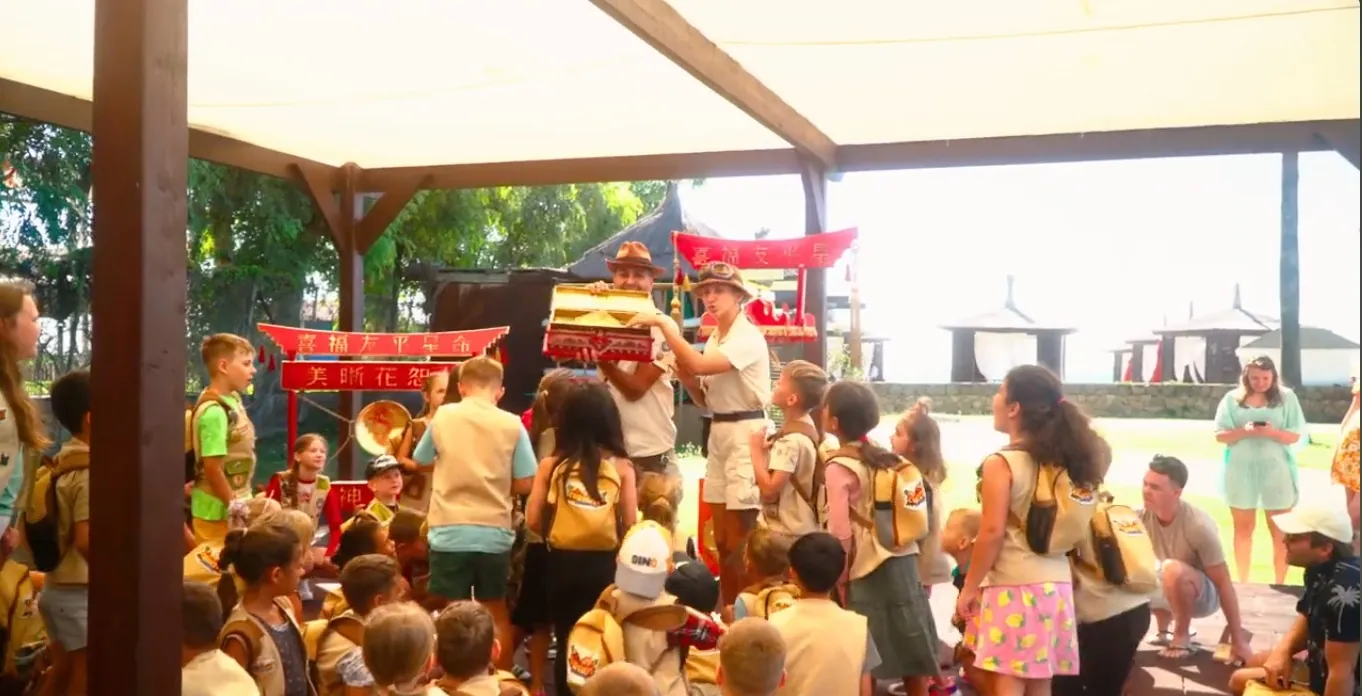
Curiocity Unlimited Quest
A mission bag on their back, compass and map in hand: teams that crack the locks on the Egypt, China and Aztec route reach the treasure.
- Age groupAges 5–15
- DurationAbout 120 minutes
- Capacity10–60 people